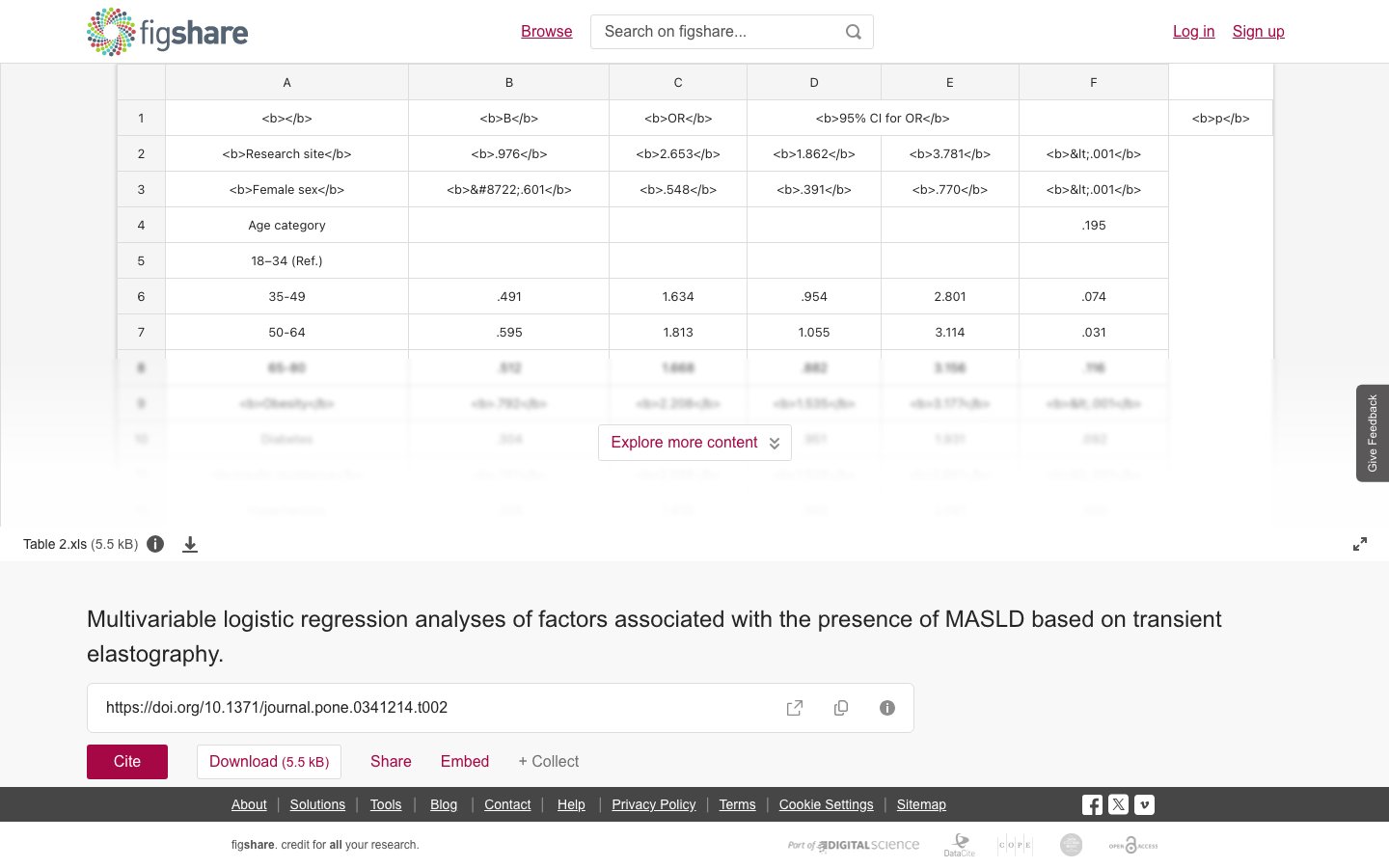
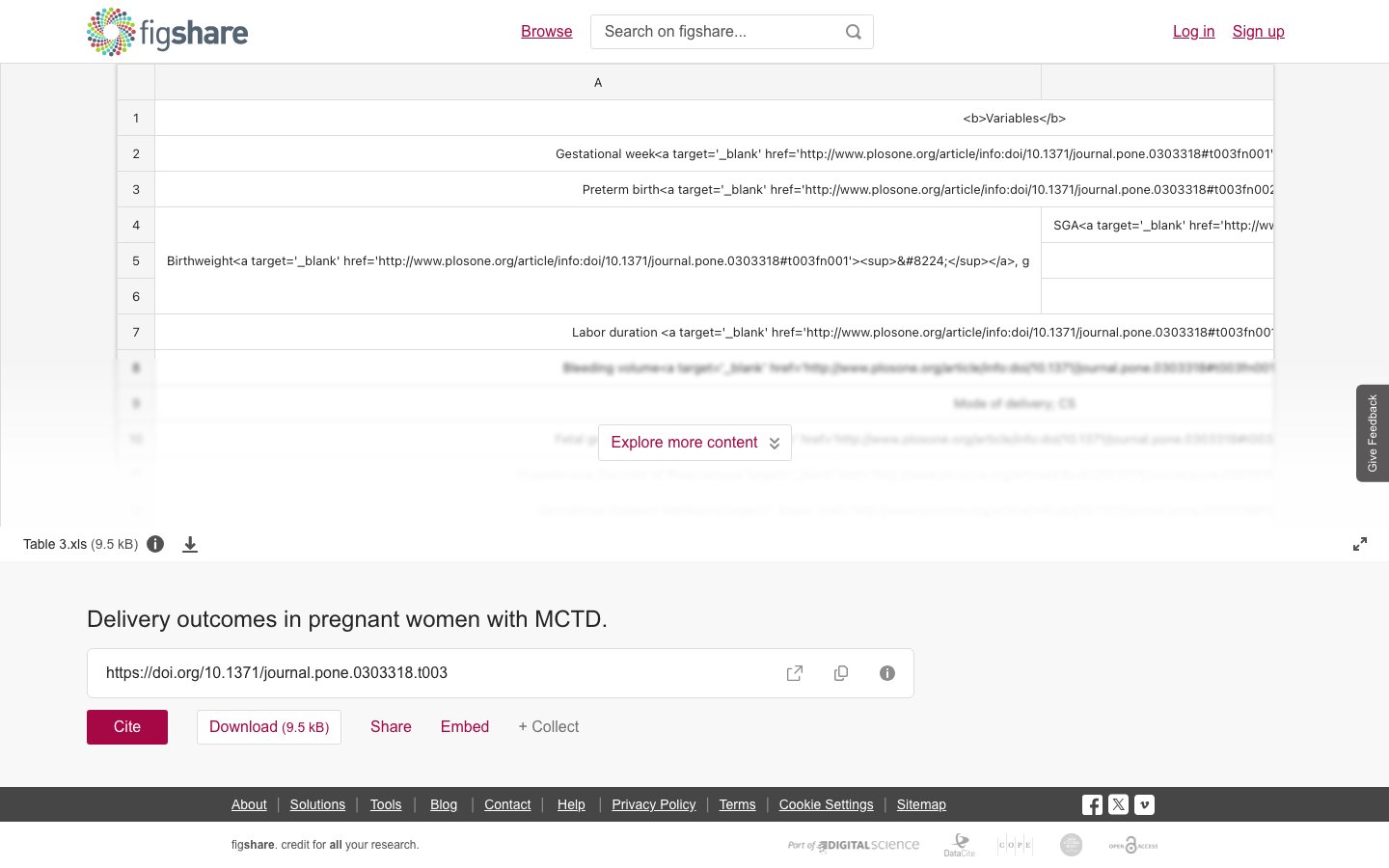
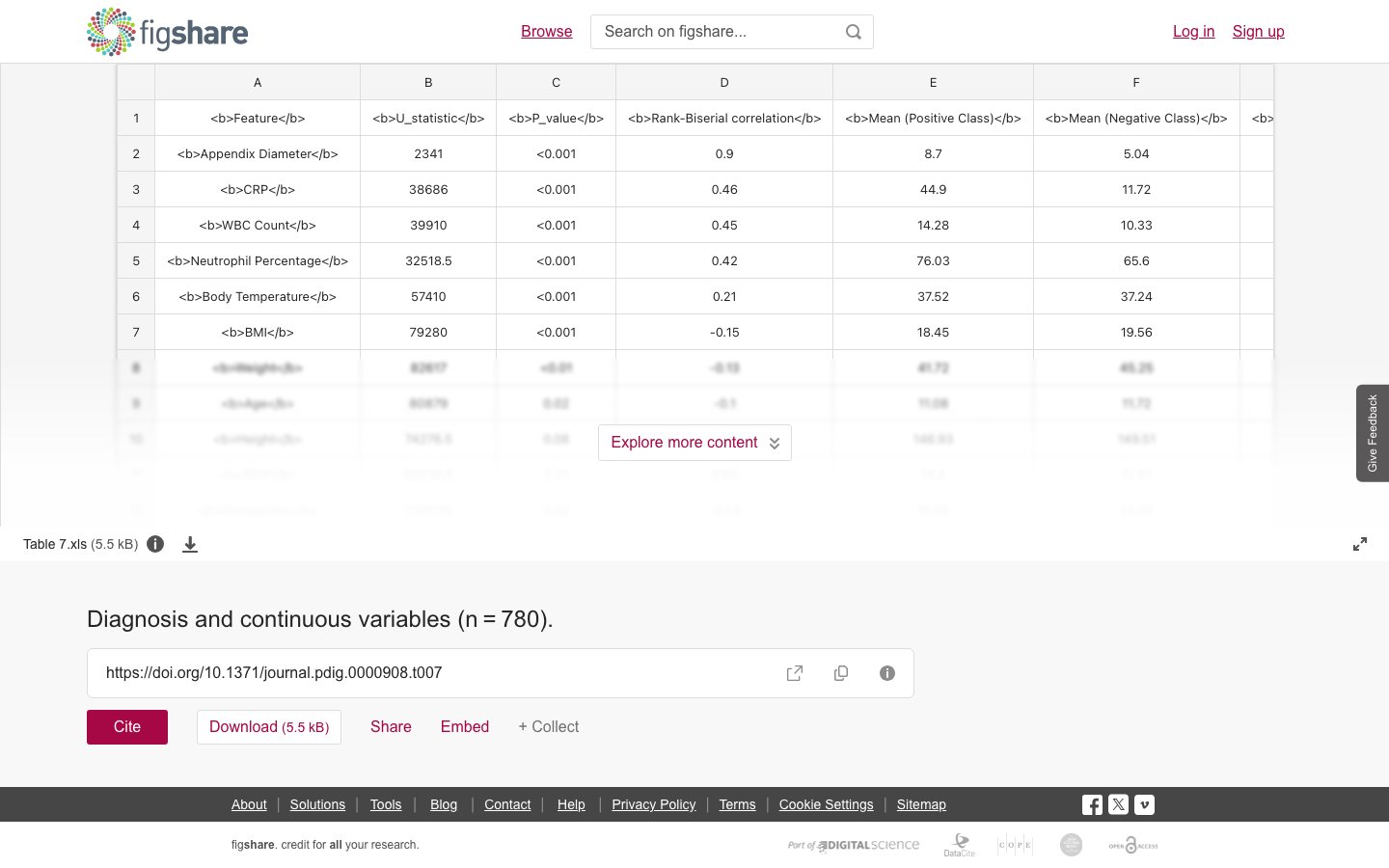
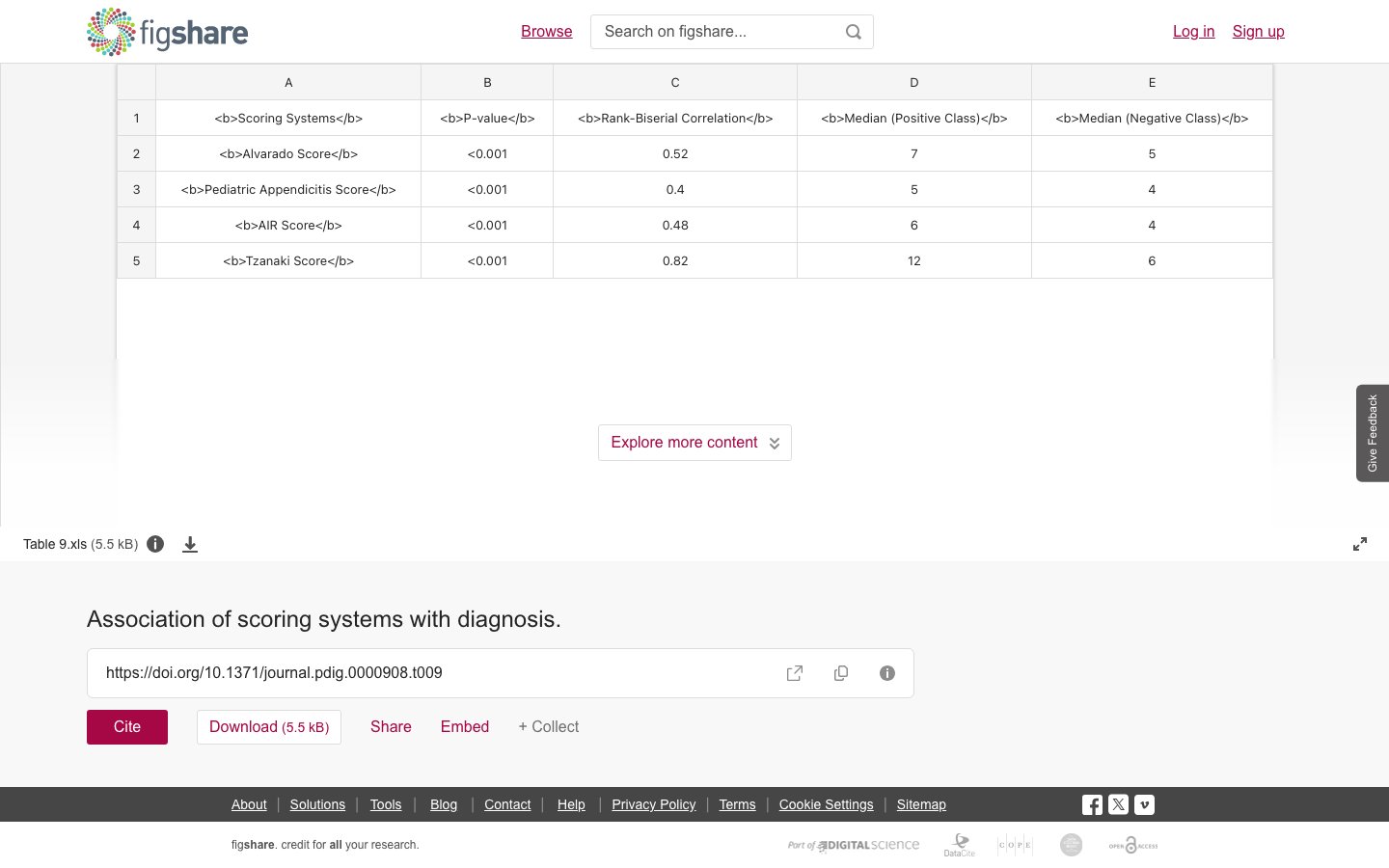
模型MI、MII和MIII1的比较
包含250+141名参与者的糖尿病足风险问卷调查数据,用于比较三种人工神经网络模型的分类性能。
基本信息
资源简介
模型MI、MII和MIII1的比较
【数据集背景】
本数据集源站标题为《Comparison between models MI, MII and MIII1.》,为 Comparison between models MI, MII and MIII1. 的组成部分。源站首次发布:2023-07-13。
【数据内容】
源站原始描述:Background and objective Diabetes Mellitus (DM) is a chronic disease with a high worldwide prevalence. Diabetic foot is one of the DM complications and compromises health and quality of life, due to the risk of lower limb amputation. This work aimed to build a risk classification system for the evolution of diabetic foot, using Artificial Neural Networks (ANN). Methods This methodological study used two databases, one for system design (training and validation) containing 250 participants with D…
【数据结构与技术规格】
文件数 1 个,合计 9.73 KB。Table 2.xls:application/vnd.ms-excel,9.73 KB。数据集 DOI:10.1371/journal.pone.0288466.t002。
【主题与分类】
源站学科分类:Medicine、Biotechnology、Biological Sciences not elsewhere classified、Developmental Biology、Cancer、Science Policy。主题标签:positive predictive value、negative predictive value、lower limb amputation、79 %, respectively、model achieved accuracy、containing 250 participants、containing 141 participants、high worldwide prevalence、developing diabetic foot、system usability scale。
【适用方向】
结构化表格数据可直接用于统计建模、特征工程与队列分析。
【获取与许可】
源站页面:https://plos.figshare.com/articles/dataset/Comparison_between_models_MI_MII_and_MIII1_/23679121
使用许可:CC BY 4.0(https://creativecommons.org/licenses/by/4.0/)。
规范引用:Ferreira, Ana Cláudia Barbosa Honório; Ferreira, Danton Diego; Barbosa, Bruno Henrique Groenner; de Oliveira, Uiara Aline; Padua, Estefânia Aparecida; Chiarini, Felipe Oliveira; et al. (2023). Comparison between models MI, MII and MIII1.. PLOS ONE. Dataset
下载信息
注册下载
需要注册 Kaggle 账号并登录后下载,适合需要跟踪下载记录和使用 API 的用户。
暂未开放公开下载
无需注册即可直接获取公开样本或文档,适合快速预览和评估数据集质量。
免登录有偿下载
公开数据集受托下载与技术交付服务。
提供高速下载与技术交付服务(收技术服务费,非数据销售)
暂未开放当前数据集主要来源为 Kaggle 公开托管,完整影像包建议通过原始链接或 Kaggle API 获取。
使用方式
数据集获取(Figshare)
- 源站标题:Comparison between models MI, MII and MIII1.
- DOI:10.1371/journal.pone.0288466.t002
- 发布日期:2023-07-13
- 文件数:1 个
- 文件总体积:9.73 KB
- 源站页面:https://plos.figshare.com/articles/dataset/Comparison_between_models_MI_MII_and_MIII1_/23679121
命令行下载
curl -L -o "Table 2.xls" "https://ndownloader.figshare.com/files/41554786"
文件清单
Table 2.xls(9.73 KB)
文件总体积 9.73 KB(源站 API 实测)。
数据加载示例(图像类)
from PIL import Image
import glob, os

files = (glob.glob(os.path.join(path, "**", "*.png"), recursive=True)
       + glob.glob(os.path.join(path, "**", "*.jpg"), recursive=True)
       + glob.glob(os.path.join(path, "**", "*.tif"), recursive=True))
print("图像文件数:", len(files))
img = Image.open(files[0]); print("尺寸/模式:", img.size, img.mode)

# torchvision Dataset 方式:
# from torchvision import datasets
# ds = datasets.ImageFolder(path)  # 要求 子目录=类别
目录组织与标注格式以源站说明和下载后实际文件为准。
数据说明
Background and objective
Diabetes Mellitus (DM) is a chronic disease with a high worldwide prevalence. Diabetic foot is one of the DM complications and compromises health and quality of life, due to the risk of lower limb amputation. This work aimed to build a risk classification system for the evolution of diabetic foot, using Artificial Neural Networks (ANN).
Methods
This methodological study used two databases, one for system design (training and validation) containing 250 participants with DM and another for testing, containing 141 participants. Each subject answered a questionnaire with 54 questions about foot care and sociodemographic information. Participants from both databases were classified by specialists as high or low risk for diabetic foot. Supervised ANN (multi-layer Perceptron—MLP) models were exploited and a smartphone app was built. The app returns a personalized report indicating self-care for each user. The System Usability Scale (SUS) was used for the usability evaluation.
Results
MLP models were built and, based on the principle of parsimony, the simplest model was chosen to be implemented in the application. The model achieved accuracy, sensitivity, specificity, positive predictive value, and negative predictive value of 85%, 76%, 91%, 89%, and 79%, respectively, for the test data. The app presented good usability (93.33 points on a scale from 0 to 100).
Conclusions
The study showed that the proposed model has satisfactory performance and is simple, considering that it requires only 10 variables. This simplicity facilitates its use by health professionals and patients with diabetes.
许可
CC BY 4.0
引用
学术使用请引用 DOI 10.1371/journal.pone.0288466.t002(source: https://plos.figshare.com/articles/dataset/Comparison_between_models_MI_MII_and_MIII1_/23679121)。
数据缺失?
依托陕西、四川两大基地,我们与超过十家三甲医院建立直接合作关系,覆盖合规授权、采集治理、专业标注、数据交付的全流程,为AI医疗团队提供即拿即用的高质量临床数据。
⚡️ 需要数据支持或标注服务?立即联系我们获取专业方案。