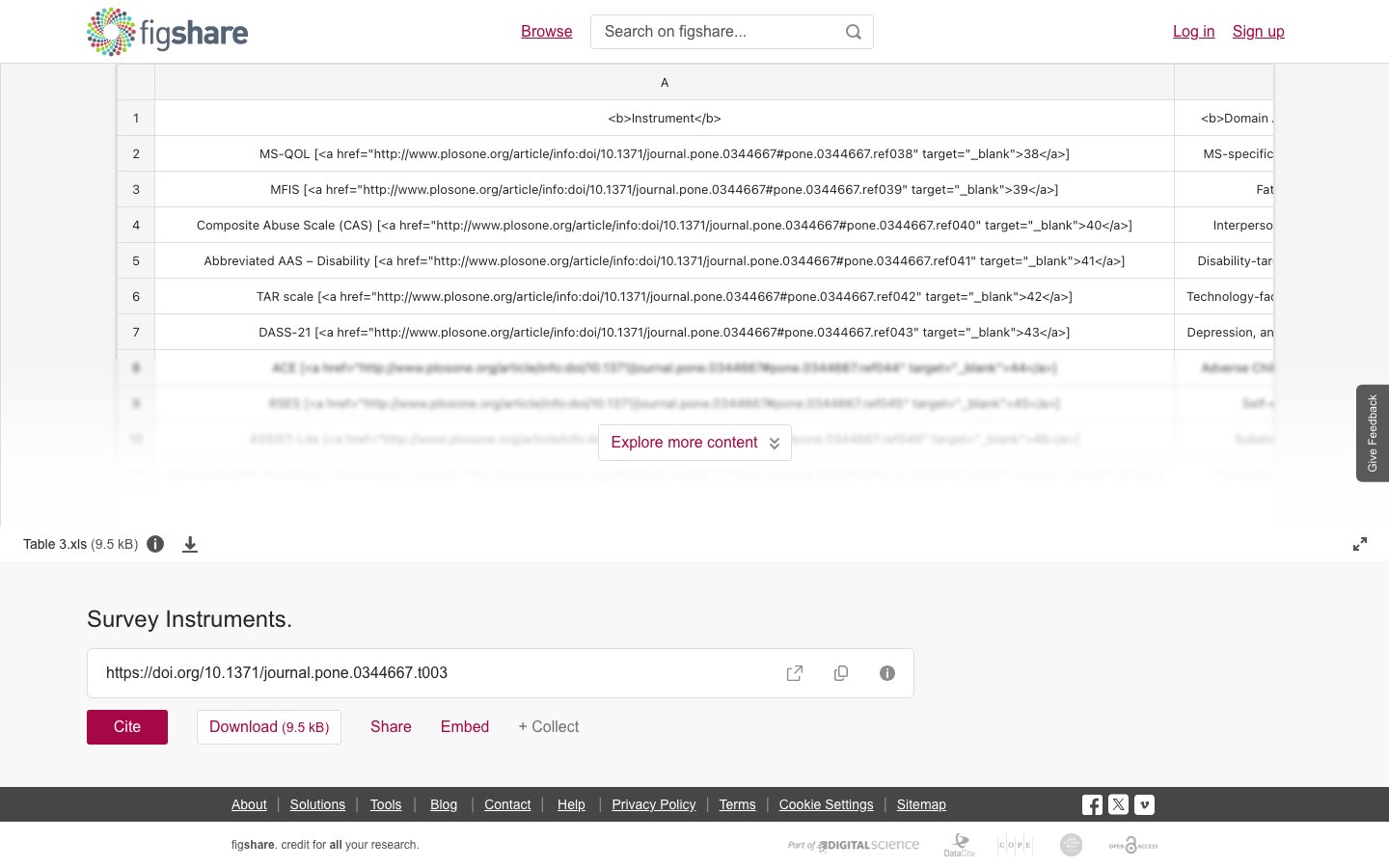
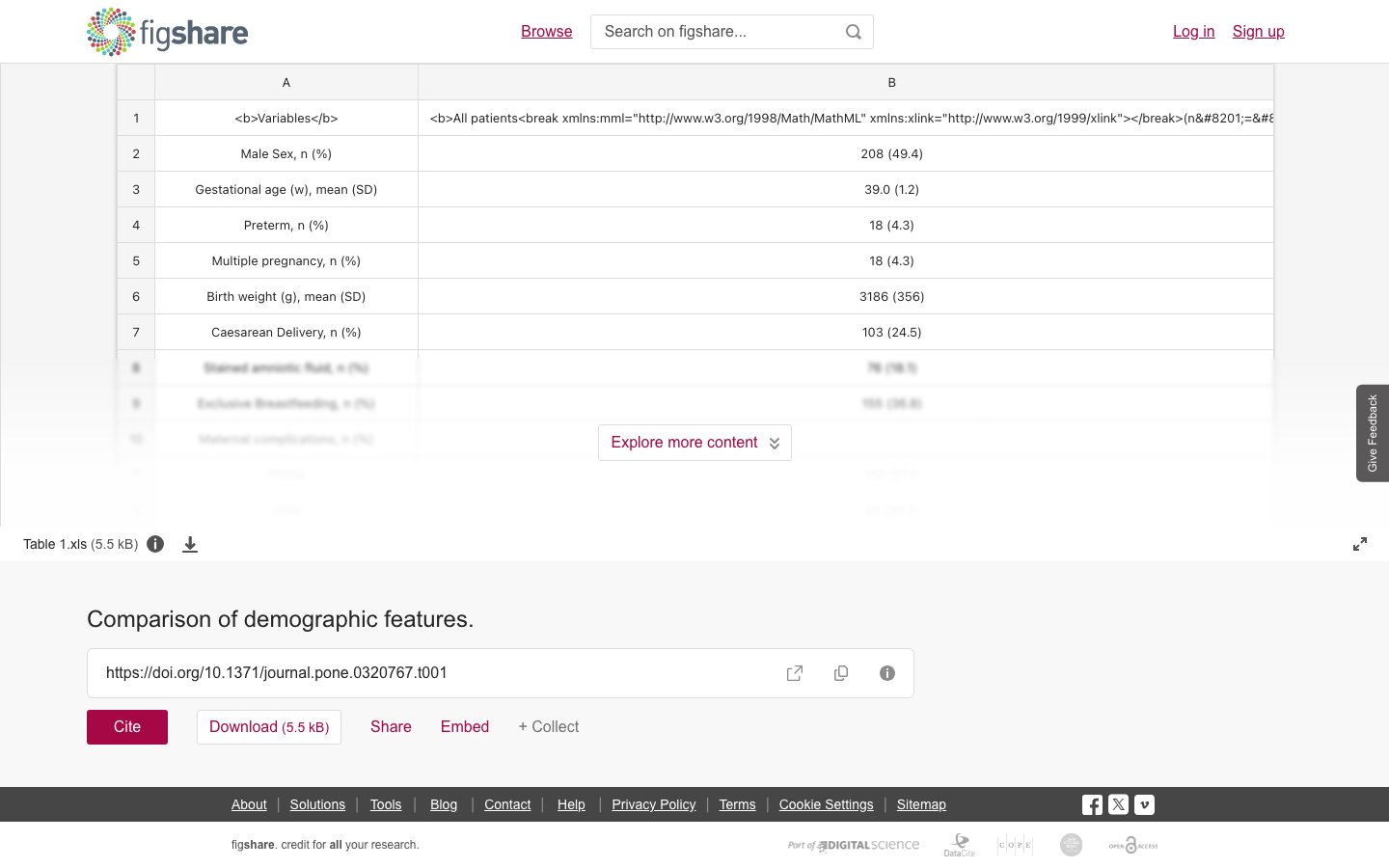
每耳每日设备使用时间记录
记录每只耳朵每日音频处理器设备使用时间,关联人工耳蜗使用者对听力植入设备满意度的阿拉伯语版APSQ验证研究。

基本信息
资源简介
每耳每日设备使用时间记录
【一句话概览】
本数据集是 figshare 公开的时序数据集,收录 1 个文件、合计 5.63 KB,主题涵盖 scale analyses indicate、ensuring daily use、cultural adaptation measures、use among arabic、arabic language translation,可用于疾病进展预测与生理信号时序建模,CC BY 4.0 许可开放获取。
【数据集背景】
本数据集源站标题为《Daily device usage times recorded per ear.》。源站首次发布:2024-06-10。
【数据内容】
源站原始描述:Objective Audio processors (AP) are the external components of hearing implants. User satisfaction with the performance and comfort of their AP is a critical factor in ensuring daily use, which leads to improved hearing outcomes. The aim of this study was to construct and validate an Arabic language translation of the APSQ for use among Arabic-speaking clinicians and patients. Design The original APSQ was translated into the Arabic language using cross-cultural adaptation measures. The final que…
【数据结构与技术规格】
文件数 1 个,合计 5.63 KB。Table 1.xls:application/vnd.ms-excel,5.63 KB。数据集 DOI:10.1371/journal.pone.0303301.t001。
【主题与分类】
源站学科分类:Space Science、Biotechnology、Biological Sciences not elsewhere classified、Developmental Biology、Marine Biology、Cancer。主题标签:scale analyses indicate、ensuring daily use、cultural adaptation measures、use among arabic、arabic language translation、improved hearing outcomes、arabic language version、arabic version、hearing implants、speaking clinicians。
【适用方向】
时序数据适用于疾病进展预测、生理信号监测与事件发生的时序建模。
【获取与许可】
源站页面:https://plos.figshare.com/articles/dataset/Daily_device_usage_times_recorded_per_ear_/26006891
使用许可:CC BY 4.0(https://creativecommons.org/licenses/by/4.0/)。
规范引用:Alasmi, Abdulaziz; Saleh, Shaza; Anderson, Ilona; Abdelsamad, Yassin; Hagr, Abdulrahman (2024). Daily device usage times recorded per ear.. PLOS ONE. Dataset
下载信息
注册下载
需要注册 Kaggle 账号并登录后下载,适合需要跟踪下载记录和使用 API 的用户。
暂未开放公开下载
无需注册即可直接获取公开样本或文档,适合快速预览和评估数据集质量。
免登录有偿下载
公开数据集受托下载与技术交付服务。
提供高速下载与技术交付服务(收技术服务费,非数据销售)
暂未开放当前数据集主要来源为 Kaggle 公开托管,完整影像包建议通过原始链接或 Kaggle API 获取。
使用方式
数据集获取(Figshare)
- 源站标题:Daily device usage times recorded per ear.
- DOI:10.1371/journal.pone.0303301.t001
- 发布日期:2024-06-10
- 文件数:1 个
- 文件总体积:5.63 KB
- 源站页面:https://plos.figshare.com/articles/dataset/Daily_device_usage_times_recorded_per_ear_/26006891
命令行下载
curl -L -o "Table 1.xls" "https://ndownloader.figshare.com/files/46959686"
文件清单
Table 1.xls(5.63 KB)
文件总体积 5.63 KB(源站 API 实测)。
数据加载示例(图像类)
from PIL import Image
import glob, os

files = (glob.glob(os.path.join(path, "**", "*.png"), recursive=True)
       + glob.glob(os.path.join(path, "**", "*.jpg"), recursive=True)
       + glob.glob(os.path.join(path, "**", "*.tif"), recursive=True))
print("图像文件数:", len(files))
img = Image.open(files[0]); print("尺寸/模式:", img.size, img.mode)

# torchvision Dataset 方式:
# from torchvision import datasets
# ds = datasets.ImageFolder(path)  # 要求 子目录=类别
目录组织与标注格式以源站说明和下载后实际文件为准。
数据说明
Objective
Audio processors (AP) are the external components of hearing implants. User satisfaction with the performance and comfort of their AP is a critical factor in ensuring daily use, which leads to improved hearing outcomes. The aim of this study was to construct and validate an Arabic language translation of the APSQ for use among Arabic-speaking clinicians and patients.
Design
The original APSQ was translated into the Arabic language using cross-cultural adaptation measures. The final questionnaire was administered to CI users in electronic form.
Study sample
117 CI users (64 female) participated. A total of 179 ears were assessed.
Results
High levels of satisfaction with audio processors were observed among CI users. Item and scale analyses indicate that this version of the APSQ measure a homogeneous and valid construct.
Conclusion
The Arabic version of the APSQ captures user satisfaction with hearing implant audio processors.
许可
CC BY 4.0
引用
学术使用请引用 DOI 10.1371/journal.pone.0303301.t001(source: https://plos.figshare.com/articles/dataset/Daily_device_usage_times_recorded_per_ear_/26006891)。
数据缺失?
依托陕西、四川两大基地,我们与超过十家三甲医院建立直接合作关系,覆盖合规授权、采集治理、专业标注、数据交付的全流程,为AI医疗团队提供即拿即用的高质量临床数据。
⚡️ 需要数据支持或标注服务?立即联系我们获取专业方案。